
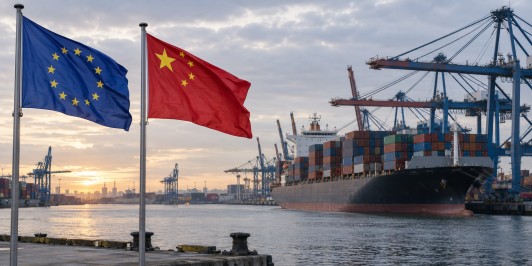
The European Union’s trade deficit with China expanded to €36.5 billion in July 2026, marking a significant increase as the bloc imported approximately three times more goods from China than it exported to the country. This growing imbalance, highlighted by Eurostat data, underscores the EU’s ongoing struggle to equalize its trade relationship with China.
EU imports from China saw an 8% rise year-on-year, reaching €53.9 billion in July, while exports to China experienced a slight decline of 1.6%, totaling €17.4 billion. This trend has resulted in an increase in the monthly trade deficit from €32.3 billion in July 2025. Over the first seven months of 2026, the cumulative trade deficit with China amounted to roughly €234 billion.
The widening gap has prompted European officials to explore strategies to rebalance trade ties, particularly in strategic sectors. Among the measures under consideration are those targeting imports of hybrid vehicles and chemicals. The importation of hybrid vehicles from China has surged since the EU imposed additional tariffs on Chinese electric vehicles in 2024, exploiting the different tariff treatments between electric and hybrid models.
In response to these challenges, EU officials have pursued voluntary export limits on Chinese hybrid vehicles as a means to ease trade tensions. This initiative forms part of a broader effort to bolster European exports and mitigate reliance on Chinese goods. Trade relations with China are expected to remain a focal point in forthcoming EU-China discussions, as Brussels aims to address these economic disparities.