
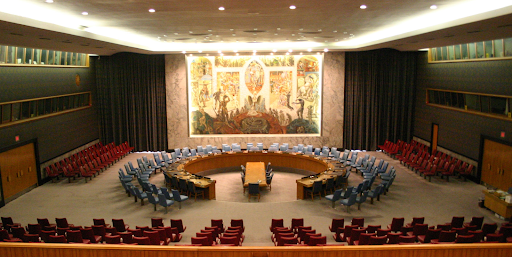
Even as the United States celebrated the UN Security Council’s adoption of its Gaza peace resolution, the plan is already facing controversy in Israel over its mention of a future “pathway” to Palestinian statehood. Prime Minister Benjamin Netanyahu, under intense pressure from right-wing factions within his government, declared on Sunday that Israel remains unequivocally opposed to the establishment of a Palestinian state. His comments underscore the deep ideological divisions that complicate the plan’s implementation, even before the international stabilization force is deployed.
The US-drafted resolution, which passed on Monday after Russia and China abstained, endorses President Donald Trump’s 20-point plan to end the two-year war. A key, controversial section of the text states that “conditions may finally be in place for a credible pathway to Palestinian self-determination and statehood” once two major conditions are met: the Palestinian Authority carries out a comprehensive reform program and the redevelopment of Gaza has significantly advanced. The resolution also outlines a US-led dialogue between Israel and the Palestinians to “agree on a political horizon.”
Despite this diplomatic language aimed at a long-term solution, Netanyahu was explicit in his opposition, vowing that his government would not accept such an outcome. Instead, he focused on the plan’s security provisions, pledging to demilitarize Gaza “the easy way or the hard way,” a statement that aligns with the resolution’s authorization of an international stabilization force (ISF) tasked with decommissioning weapons and destroying military infrastructure.
This new UN mandate establishes a “Board of Peace,” chaired by President Trump, to act as a transitional authority overseeing Gaza’s reconstruction and economic recovery. The resolution’s passage is considered essential for legitimizing this new body and encouraging nations to contribute troops to the ISF. US Ambassador Mike Waltz championed the plan as a way to free Gaza from “terror’s shadow” and create a “prosperous and secure” enclave, framing it as a shift “where rockets will give way to olive branches.”
However, the plan faces threats from multiple directions. Hamas, the militant group governing Gaza, flatly rejected the resolution, calling it an “international guardianship” and vowing not to disarm. Furthermore, the powerful abstentions from Russia and China signal a lackE of global consensus. Russian Ambassador Vasily Nebenzya criticized the UN for ceding “complete control” to a US initiative without a clear role for the UN itself, highlighting the fragile diplomatic ground upon which the new plan is built.