
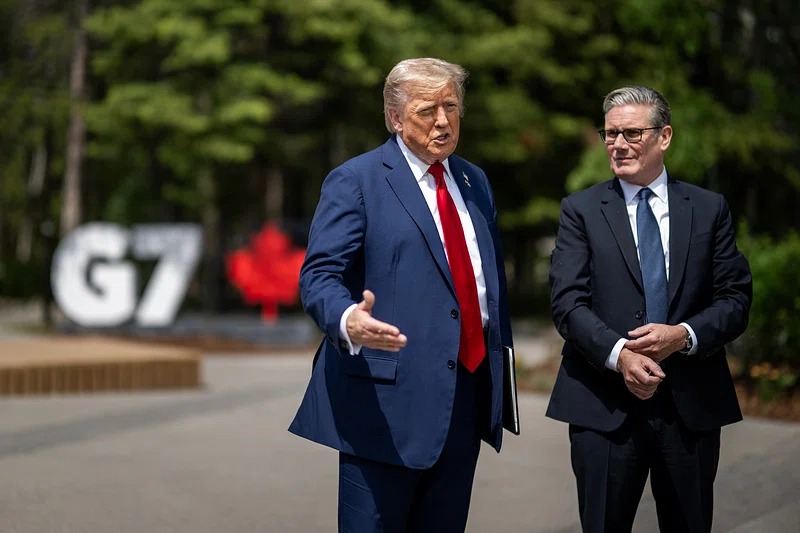
Rarely has the language of alliance been deployed so pointedly as when the American president took to his social media platform to remind Britain that loyalty is measured not in words but in timely action. The episode marked one of the most publicly awkward moments in the modern history of US-UK relations.
The president acknowledged Britain’s historical standing — calling it once perhaps the greatest ally America had ever known — before delivering the twist: the UK had waited too long to offer support during the American-Israeli strikes on Iran. By the time it came around, the president implied, the critical moment had passed.
The British government had initially refused American requests to use bases at Fairford in Gloucestershire and Diego Garcia in the Indian Ocean. It later reversed course, granting access for specific defensive purposes. Four US bombers duly arrived and began operations, with British officials insisting the decision was made to protect lives rather than to take sides politically.
Within the UK, the prime minister faced criticism from two directions. On one side, members of his own Labour Party were uncomfortable with any involvement in a conflict they viewed as primarily an American and Israeli undertaking. On the other, foreign policy hawks argued he had damaged the special relationship by hesitating in the first place.
The American secretary of state amplified the criticism at an international forum, suggesting that allies who are absent when needed most cannot count on reciprocity. His remarks were pointed and carefully worded, and they landed with considerable force on both sides of the Atlantic.