
Within Tregeseal’s stone circle, the landscape reveals layers of meaning extending across millennia. Granite formations stand against moorland that rises toward Carn Kenidjack, while traditional tales describe supernatural inhabitants emerging after dark. Modern researchers seek understanding through scientific methods, discovering how ancient communities incorporated astronomical knowledge into monument placement.
The Land’s End peninsula’s geography offers natural advantages for solar observation. Its granite spine extends southwest, aligned with the midwinter sunset direction. Archaeoastronomer Carolyn Kennett argues this geological feature influenced how Neolithic peoples conceptualized and utilized the landscape, creating what amounts to an extensive winter solstice observatory constructed over generations.
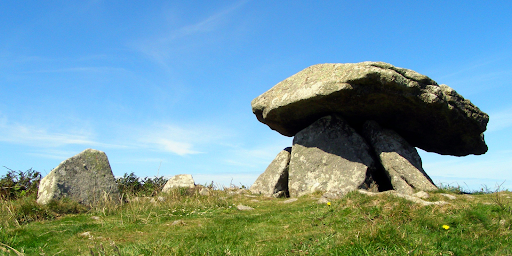
Evidence appears in monuments scattered across the peninsula. Chûn Quoit sits positioned so observers witness the winter solstice sun descending behind Carn Kenidjack’s rocky outcrop. This precision suggests intentional architectural choices based on careful observation of annual solar cycles, knowledge essential for agricultural communities dependent on seasonal patterns.
Tregeseal circle’s orientation toward the Isles of Scilly adds mythological dimensions to astronomical function. The islands’ appearance depends on weather—sometimes distinct, sometimes invisible—creating impressions of a fluctuating otherworld. Ancient peoples may have connected this visual instability with solstice symbolism of death and rebirth, darkness preceding returning light.
The Kenidjack holed stones remain enigmatic despite investigation. Their unique design—small holes near ground level—distinguishes them from other Cornish holed stones. Theories suggest calendrical functions, with sunlight creating specific shadow patterns that marked time’s progression through autumn toward the critical solstice turning point when days cease shortening.
Contemporary engagement with these ancient sites combines academic research, artistic reflection, and community celebration. Filmmaker Christopher Morris documents how standing stones persist through seasonal changes, while festivals like Montol revive traditional customs with masked dancers, music, and symbolic sun burning, maintaining vital cultural connections to astronomical cycles that structured prehistoric life.