
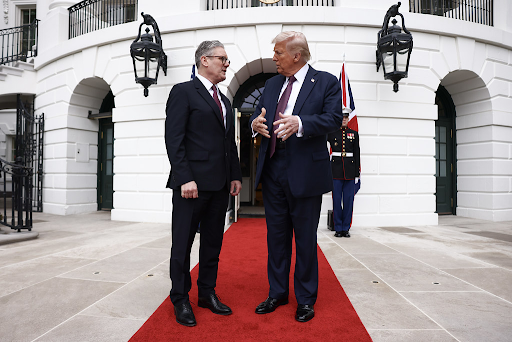
In a moment of unvarnished diplomatic disagreement, President Donald Trump publicly rebuffed Prime Minister Keir Starmer’s strategy on Palestinian statehood during his visit to London. The President used the opportunity of a joint press conference to state his firm opposition to the UK’s plan for unilateral recognition, putting the two allies’ differing worldviews on full display.
President Trump’s stance is a continuation of decades of American foreign policy that prioritizes a negotiated peace settlement above all else. He reiterated the U.S. belief that recognizing a Palestinian state before a final agreement is reached would undermine the very process it is meant to support. The recent American vote against a popular UN two-state solution resolution served as a global reminder of Washington’s unwavering commitment to this principle.
Prime Minister Starmer was tasked with the challenge of defending his policy without escalating the disagreement into a full-blown diplomatic crisis. He acknowledged the difference of opinion but argued for the merits of his “recognition as catalyst” approach. He contended that after years of stalemate, a bold move is needed to change the dynamics on the ground and create a more fertile environment for a lasting peace.
This public showdown highlights a critical divergence in problem-solving approaches. The U.S. adheres to a linear, process-oriented method where statehood is the final step. In contrast, the UK is now advocating for a more dynamic, interventionist approach, where the act of recognition is used as a strategic lever to kick-start the process and rebalance the negotiating table.
While the immediate fallout was contained by Starmer’s decision to delay the move, the exchange has left a lasting impression. It demonstrates the growing confidence of a post-Brexit UK to chart its own course in foreign affairs, even if it means publicly disagreeing with its most powerful ally on a matter of significant global importance.