
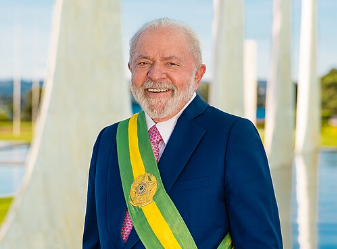
Brazil’s current president has taken a strong public stance against recently passed legislation that would provide significant sentence reductions for individuals convicted in the 2022 coup attempt. Luiz Inácio Lula da Silva stated unequivocally that he will veto the bill when it arrives for his signature, though he acknowledged the political reality that lawmakers could override his decision. The legislation directly affects Jair Bolsonaro, who received a 27-year sentence for orchestrating the failed attempt to overturn election results.
The bill’s passage through both congressional chambers represents a significant political moment in Brazil’s ongoing reckoning with the coup attempt. Conservative lawmakers, who constitute a majority in congress, supported the measure despite widespread public disapproval. Lula framed his opposition in terms of democratic principles, arguing that those who attack the foundations of democracy must face appropriate legal consequences for their actions.
Technical analysis of the legislation reveals that it would transform Bolsonaro’s sentence substantially, potentially allowing him to serve as little as two years in maximum-security conditions rather than six. The mechanism achieves this through a legal procedure that consolidates related criminal charges, applying only the penalty for the most serious offense. Additional reductions could come through standard programs that reward positive behavior and educational engagement during incarceration.
The Bolsonaro family’s response to the legislation has been measured, with Senator Flávio Bolsonaro describing it as an acceptable compromise given political realities. The senator, who is being groomed as a potential presidential candidate for the 2026 election, publicly acknowledged that while the bill doesn’t provide complete amnesty, it represents meaningful progress. This political calculation suggests the family views reduced sentences as a stepping stone toward rehabilitation of their political brand.
Beyond its impact on the former president, the legislation affects a wide range of convicted individuals, including military personnel who participated in the coup attempt and civilian rioters who attacked government buildings. This broad application has alarmed those who viewed the convictions as crucial for establishing accountability norms in Brazilian democracy. Recent polling data indicates that most Brazilians oppose reducing these sentences, highlighting a gap between popular opinion and legislative action that could have implications for future elections.