
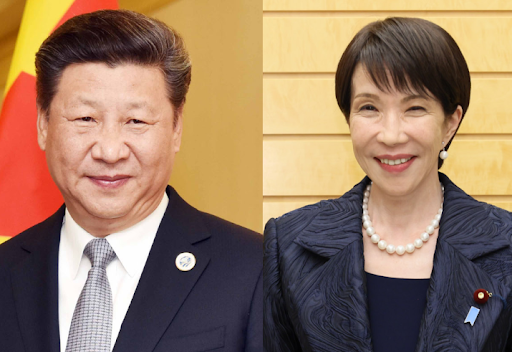
The longstanding historical and political tensions between Japan and China have erupted into a full-blown diplomatic crisis centered on Taiwan, with both nations refusing to compromise. Chinese authorities have issued a second travel advisory warning their citizens about visiting Japan, citing alleged incidents of violence and discrimination, while simultaneously implementing what appears to be a coordinated campaign of economic pressure across multiple sectors.
Prime Minister Sanae Takaichi’s comments about Japan potentially using military force in response to Chinese action against Taiwan have triggered Beijing’s strongest response in years. Her characterization of such a scenario as a “survival-threatening situation” for Japan represents a significant shift in Japanese public diplomacy, one that China views as a violation of decades-old agreements and understanding between the two nations.
The economic ramifications are already materializing across Japan’s tourism sector, which had been experiencing a robust recovery following pandemic-related restrictions. With over 8 million Chinese visitors in the first ten months of this year representing 23% of total international arrivals, the potential loss of this market segment threatens not just large tourism operators but countless small businesses that have built their operations around serving Chinese clientele.
International relations experts suggest that the domestic political dynamics in both countries make de-escalation particularly challenging. Professor Liu Jiangyong indicates that China will implement countermeasures gradually and unpredictably, while Sheila A. Smith notes that leaders in both countries cannot afford to appear weak before their domestic audiences. This creates a diplomatic deadlock where neither side can easily back down without facing internal political costs.
The dispute ultimately centers on competing interpretations of the 1972 agreement that normalized diplomatic relations between the two countries. China insists on explicit Japanese endorsement of the “One China” principle, while Japan maintains that its original formulation—acknowledging and respecting China’s position without full agreement—represents its consistent stance. This ambiguity, which once facilitated diplomatic flexibility, has become a source of fundamental disagreement as geopolitical tensions rise across the Indo-Pacific region.