
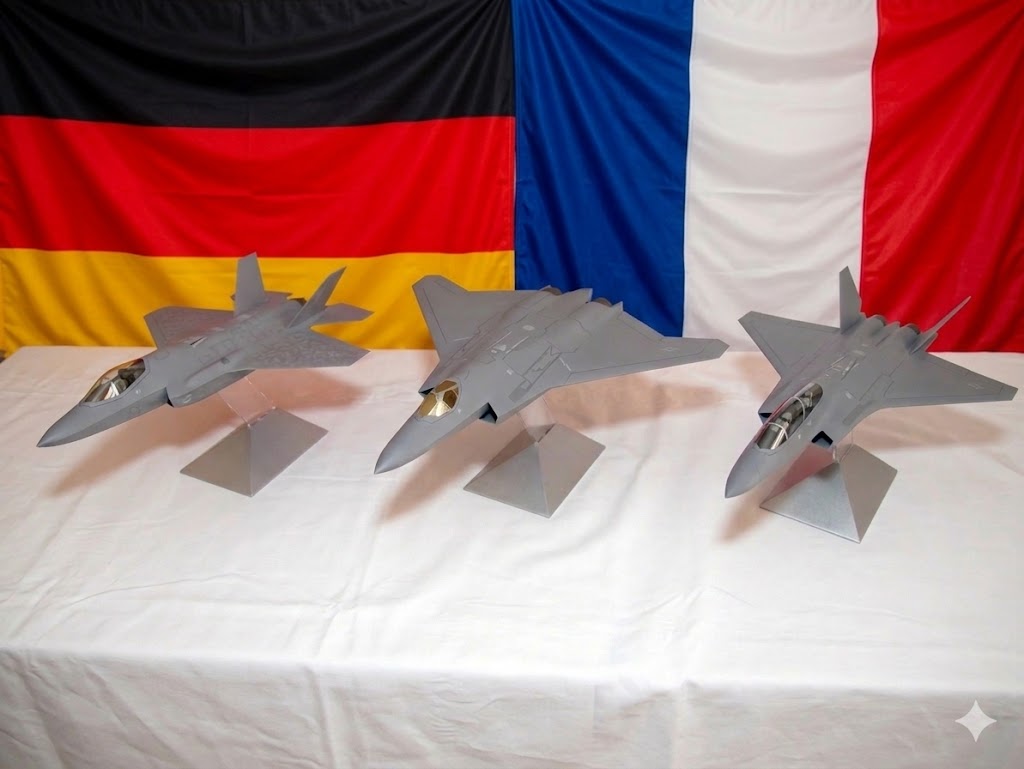
France and Germany have decided to halt their collaborative effort on the Future Combat Air System (FCAS), a joint fighter jet programme, marking a significant setback for European defense cooperation. Initiated in 2017 by French President Emmanuel Macron and former German Chancellor Angela Merkel, the project aimed to develop a next-generation fighter aircraft by 2040 to replace France’s Rafale and Germany and Spain’s Eurofighter fleets. The decision to abandon the programme follows years of unresolved disagreements among the companies involved, chiefly France’s Dassault Aviation and Airbus, which represents German and Spanish interests.
The primary obstacles to progress included disputes over leadership roles, intellectual property rights, and the overall management structure of the FCAS. Dassault sought to lead the development to protect its technology, while Airbus pushed for a more equitable partnership with broader technology sharing among the nations involved. Additionally, France and Germany clashed over the operational requirements of the aircraft. France advocated for a fighter capable of carrying nuclear weapons and operating from aircraft carriers, whereas Germany’s military needs did not align with this vision.
Despite numerous political interventions aimed at salvaging the partnership, the impasse proved insurmountable, with recent mediation attempts failing to reconcile the differences between the companies. This decision underscores the complexities and challenges of coordinating large-scale military projects across multiple countries and industries within Europe.
While the fighter jet component of the FCAS has been shelved, there is a possibility that certain elements of the broader initiative may continue independently. European officials have suggested that work on other supporting technologies, such as advanced drones and a secure combat data network that would link aircraft and military systems, could proceed as separate projects. This pivot reflects an effort to salvage some aspects of the original goals despite the overall programme’s collapse.
The abandonment of the FCAS project poses a significant challenge to the vision of European defense integration, highlighting the difficulties inherent in aligning the strategic interests and technological ambitions of multiple nations. As Europe grapples with these challenges, the dissolution of the joint fighter jet initiative serves as a reminder of the obstacles that still stand in the way of a unified defense strategy on the continent.