
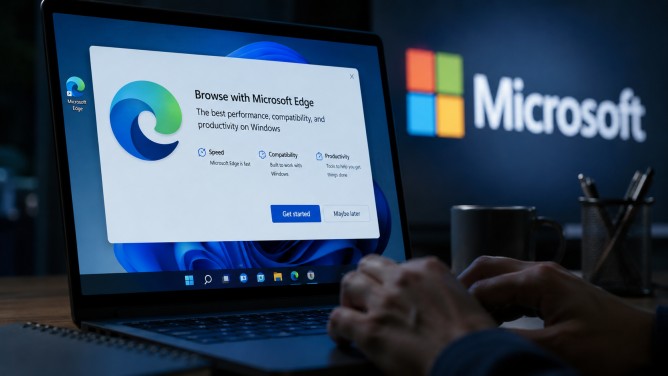
Microsoft is under renewed examination amid allegations that it employs aggressive strategies to push Windows users towards its Edge browser, potentially restricting the use of competing browsers. A report titled “Over the Edge 2.0” from Mozilla Research claims that Microsoft’s design practices complicate the process for users wishing to download, set as default, and consistently use alternative browsers on Windows devices.
The report accuses Microsoft of promoting Edge through various platforms like Windows, Bing, and Copilot, utilizing features that allegedly deter users from switching to other browsers. Key concerns highlighted include promotional banners urging Chrome users to transition to Edge, links that open in Edge despite users having set different default browsers, and instances where browser preferences aren’t retained during system upgrades.
The Browser Choice Alliance, an industry coalition representing companies such as Opera, Vivaldi, and Google Chrome, argues that these findings illustrate Microsoft’s global impact on browser competition. The alliance urges Microsoft to honor user preferences and foster a fairer browsing environment. Despite these criticisms, Google Chrome remains the leading browser worldwide, holding nearly 70% of the market share, followed by Apple’s Safari in second place, with Microsoft Edge trailing in third with just over 5%.
Researchers note that browser choice seems to be more safeguarded within the European Economic Area. This is attributed to the Digital Markets Act, which has compelled Microsoft to eliminate certain contested practices. However, they contend that many of these criticized tactics persist in other regions, including the United States, India, and the United Kingdom.
Industry advocates are now calling on Microsoft to streamline the process of switching browsers and to discontinue practices they claim harm competition and limit consumer choice. The ongoing scrutiny underscores the tech giant’s influence in the browser market and the broader implications for user autonomy and market fairness.