
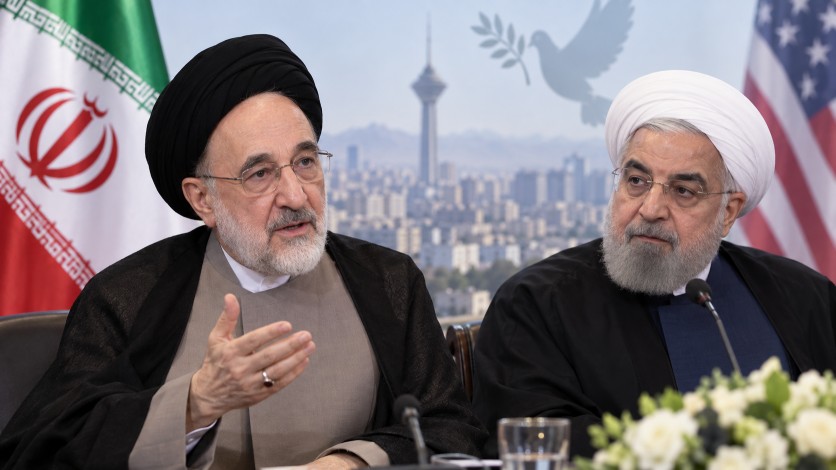
In a notable push for diplomacy, former Iranian presidents Mohammad Khatami and Hassan Rouhani have urged for a resolution to the ongoing conflict with the United States, advocating what they call an “honourable” or “dignified” peace. Their statements stand in stark contrast to Iran’s prevailing hardline rhetoric. Rouhani has taken a bold step further, suggesting that the Iranian populace should have a voice in deciding if the nation should persist in its confrontational stance with major global powers, especially if public support for such a strategy is lacking.
Khatami echoed this sentiment by cautioning against the governance of the nation through prolonged wartime emotions. He emphasized the importance of prioritizing Iran’s long-term national interests over the persistence of conflict, supporting a move towards measured diplomacy and negotiations. These calls for a diplomatic approach have sparked backlash from Iranian hardliners, who have accused the former leaders of advocating surrender. This tension is evident in media outlets and loyalist rallies, which have criticized these calls for compromise, with the editor of the hardline newspaper Kayhan even suggesting investigations into the former presidents.
The backdrop to this debate is Iran’s increasing economic strain, exacerbated by rising fuel costs and dwindling oil revenues. These economic challenges are compounded by ongoing tensions in the Strait of Hormuz, a critical artery for global energy markets. Despite these pressures, Iranian officials continue to adopt a tough public stance, hinting at the possibility of a more aggressive military approach if diplomatic efforts with Washington do not yield the desired results. This scenario raises concerns that economic duress might lead to further escalation rather than prompt concessions.
Amidst these tensions, there remains a glimmer of regional diplomatic engagement, notably between Saudi Arabia and Iran. Senior officials from both nations have sustained dialogues aimed at mitigating regional tensions and fostering stability. This continued engagement underscores a dichotomy in Iran’s external relations, with former leaders promoting negotiation and public involvement, while current authorities maintain a firm stance on military readiness should their demands remain unmet.
The current discourse highlights an emerging rift within Iranian political circles. While former presidents advocate for a diplomatic path and increased public consultation, the nation’s present leadership warns of military escalation as a lever to address unmet demands. This divide reflects broader tensions within Iranian society regarding the best course forward amid mounting economic and geopolitical pressures.