
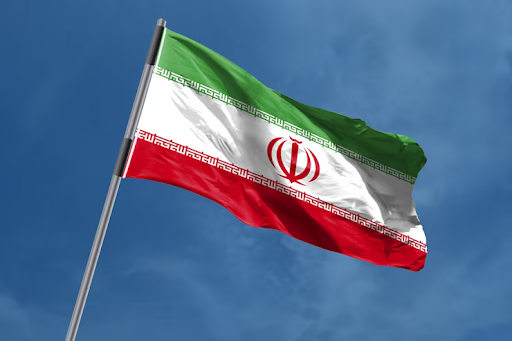
The United Nations Secretary-General António Guterres issued a stark warning on Wednesday that the devastation seen in Gaza must not be allowed to repeat itself in Lebanon, calling on Israel to halt its military operations against Hezbollah and on the militant group to stop firing on Israel. His intervention came as the Iran conflict entered its latest phase of diplomatic turbulence, with Tehran rejecting the US ceasefire proposal and submitting its own conditions, while Israel simultaneously intensified its strikes across Iran. The Lebanon dimension added yet another layer of complexity to what was already one of the most multi-faceted regional conflicts in decades.
Iran had made Lebanon central to any prospective ceasefire deal, telling intermediaries that an end to Israel’s offensive against Hezbollah in southern Lebanon must be included in any agreement. This condition put Washington in a difficult position, as Israel — which was conducting its own military campaign against Iran and Hezbollah simultaneously — showed no inclination to halt its Lebanon operations. Israeli ground forces were advancing northward against Hezbollah fighters south of the Litani River, with soldiers posting footage from towns that had previously been under Hezbollah control.
On the Iran-specific diplomatic front, the 15-point American ceasefire proposal delivered through Pakistani intermediaries was rejected by Tehran and replaced with a five-point Iranian counter-plan demanding a halt to all strikes including assassinations of Iranian officials, security guarantees, war reparations, and Iranian sovereignty over the Strait of Hormuz. Foreign Minister Araghchi confirmed the US document had reached senior Iranian leadership but stated the country had no intention of negotiating at present. The White House maintained that discussions were continuing productively.
US forces had struck over 10,000 Iranian targets, destroying 92% of its largest naval vessels and most of its missile and drone production infrastructure. Israel simultaneously conducted multiple waves of strikes on Iranian cities including Isfahan and Tehran. Iran responded with ballistic missiles and drones targeting Israel and Gulf nations, including an attack that caused a major fire at Kuwait’s international airport and led to arrests of individuals linked to a Hezbollah assassination plot against Kuwaiti leadership.
The war’s political and economic toll was mounting daily. Trump’s approval rating was at a record low of 36%, and 59% of Americans said the conflict had gone too far. Oil prices remained elevated due to the Hormuz blockade. China urged dialogue, Egypt and Pakistan maintained hope for direct talks by Friday, and the White House kept a cautiously optimistic tone — even as the sheer scope of the conflict, now explicitly linked to the Lebanon theatre, made a comprehensive resolution appear ever more distant.